Reasons to Choose a Study Visa for Germany
The benefits of studying in Germany are numerous. Top colleges offer various courses, many of which are taught in English. Most courses have no tuition fees, and students can find living expenses reasonable.
International students with a study visa for Germany can access a lot of assistance and will be made to feel at home in this fascinating multicultural nation. We’ll look at some of the main advantages of studying in Germany and the special privileges that come with it.
No Tuition Fees
This is an excellent advantage because paying for college may be difficult in many other countries. The UK and US have some of the most expensive tuition fees, discouraging many international students from applying to university or leaving in debt for many years.
Students can choose their universities and courses without the restriction of high tuition fees. In prestigious universities, competition and requirements may be extremely high.
Whereas private institutions make up less than 10% of all universities in Germany. They have a high rate of acceptance and offer top-notch courses.
There are many ways to help you pay for education in Germany, even if you don’t have to pay for tuition for your degree programme.
Take Advantage of a Germany Student Visa
Before you travel to Germany to study, you must apply for a student visa if you are an international student. When you get your visa, you can begin your studies even though there may be a lot of paperwork, and it may take a few months to process.
A student visa generally costs nothing and has an initial validity of three months. If you want to study in Germany for up to two years, you can apply for a residence visa after you arrive there.
There is no need to pay for a student visa; it is valid for only three months. Also, you can apply for a residence visa to stay in Germany for approximately two years once you’ve arrived. If more time is needed to study, the visa can be extended. To make this process easier, consider reaching out to Germany education consultants in Dubai who can assist you every step of the way.
Inexpensive Cost of Living
International students are predicted to require an average of €992 monthly to meet the cost of living. The high price is typically rent, which can be split by finding roommates.
You might not have to pay tuition fees for your course to study in Germany, but you may still have to pay fees to the university. This includes costs for some university services, like transportation, office support, sports facilities and cafeterias.
Throughout your stay in Germany, you should keep your health insurance coverage. You must consider regular food, transportation, phone, internet and utility costs. Generally, the cost of living in Germany is higher in the south and west while lower in the north and east.
A Variety of Courses are Available
While some institutions or universities might focus on language, literature, and arts, others may concentrate on maths, the natural sciences, engineering, and technology courses.
It is recommended that you take a few months to thoroughly research the courses offered in your field of interest and identity the colleges to which you want to apply. There are different courses available to study in Germany :
- Undergraduate Degree
- Graduate Degree
- Ph.D./ Doctorates short courses
- Online Education
- Prep Classes
- Language Lessons
Also, you can choose your course from various options, including Law, Economics, Social Sciences, Agriculture, Forestry and Nutritional Sciences.
High-Class Education
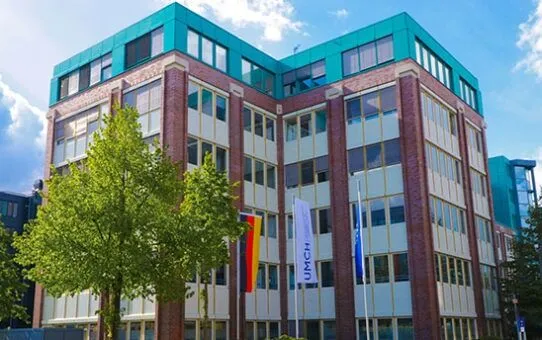
Germany’s 400 higher education institutions are ranked in the top 100 globally and among the top 20 in Europe. The Wildau Foundation Programme, Srh hochschule heidelberg, UMCH, University of Applied Sciences Europe and lancaster University are the five top universities to study in Germany.
Germany puts high importance on education, which is evident in excellent instruction. International students can experience the high education class on offer through English language courses.
As a part of your university application, you should study German or take an aptitude exam.
Each Course is Available to Study in English
If you are going to stay in Germany as an international student for a while, there is no compulsion to speak German. However, acquiring a little bit of the language is still vital. Several courses are available as long as you can communicate in English and understand it sufficiently. If you’re unsure about the process, study in Germany consultants in Dubai can guide you through the steps to ensure a smooth transition.
Your language skills will naturally advance as you keep learning by studying in English. As you start talking with fellow students and faculty members on campus, you will also learn the German Language.
A great approach to interacting with people from other cultures and countries is to study in Germany. International students from all over the world will attend this kind of course in large numbers, so whether you are studying history, engineering or medicine, you will meet friends with a lot in common.
Germany is a Fascinating Country
Thanks to Germany’s distinctive culture, visitors can participate in festivals and other special celebrations, which gives them unique new experiences. You can discover the history of the country when you go to study.
Most universities are found in or close to large cities with all the modern facilities, including supermarkets, restaurants, bars and nightclubs. You may explore and visit more than just the area around your university.
Most likely, German life differs from what you are accustomed to. Take advantage of all opportunities to visit and experience this fascinating country.
Prominent Scholarships in Germany
- DAAD Scholarship Program -DAAD (Deutscher Akademischer Austauschdienst) is a collaboration of German higher education institutions that promotes international academic relations.
They concentrate on fostering academic and research fellowships by providing scholarships to international undergraduates, graduate students, and scientists working in Germany.
The DAAD offers scholarships to students who want to pursue a degree as a full-time programme of study. The candidates must have at least two years of good job experience and a bachelor’s degree earned within the last 6 years. For postgraduate and doctorate students, the monthly salary for the DAAD fellowship is 850 and 1200 Euros, respectively.
- Heinrich Boll Foundation Scholarship – Every year, the Heinrich Boll Foundation gives about 1,200 scholarships to the most deserving undergraduate, graduate and doctorate students from various fields. These students need to be pursuing their degrees in publicly recognized German universities.
In addition to individual allowance, non-EU Master’s students will get 850 Euros per month. EU students will receive 649 Euros and 30 euros for books each month. It is awarded for the regular study period with the possibility of a one-semester extension.
Whereas, Ph.D. students outside the EU will get 1,200 euros per month and 100 euros monthly, including mobility allowance and other utility allowances. Ph.D. students from the EU will make 1,350 euros per month and a $100 research cost allowance.
- DeutschlandStipendium National Scholarship Programme – The Deutschlandstipendium provides financial assistance to bright, motivated students worldwide. It offers financial aid to students at all German universities.
Through a public-private partnership, foundations or private people provide students with 150 euros as a monthly stipend, and the federal government tries to match that stipend with an additional 150 euros.
The scholarship is for two semesters, but it may be suitable for as long as the typical study term lasts. For private funding, the institution must determine after two semesters if the student is still eligible for the requirements of the scholarship. You can also access mentoring programmes, networking opportunities and internships through the scholarship.
- Konrad-Adeanauer- Stiftung Scholarship for International Students – This scholarship is open to students with solid political interests and above-average academic performance.
The primary goal of this grant is to support international students and doctoral candidates who have successfully completed their undergraduate degrees in their respective home countries.
Students enrolled in master’s, and postgraduate programmes will get 850 euros per month regularly for two years. Additionally, Doctoral candidates and visitors to Germany for research will get 1,100 euros per month for three years consecutively.
Courses which are linked to the doctorate project are eligible for reimbursement of tuition expenses up to 500 euros per semester.